

The Lost Art of Reading
In a world built to capture your attention, reading helps you reclaim it.

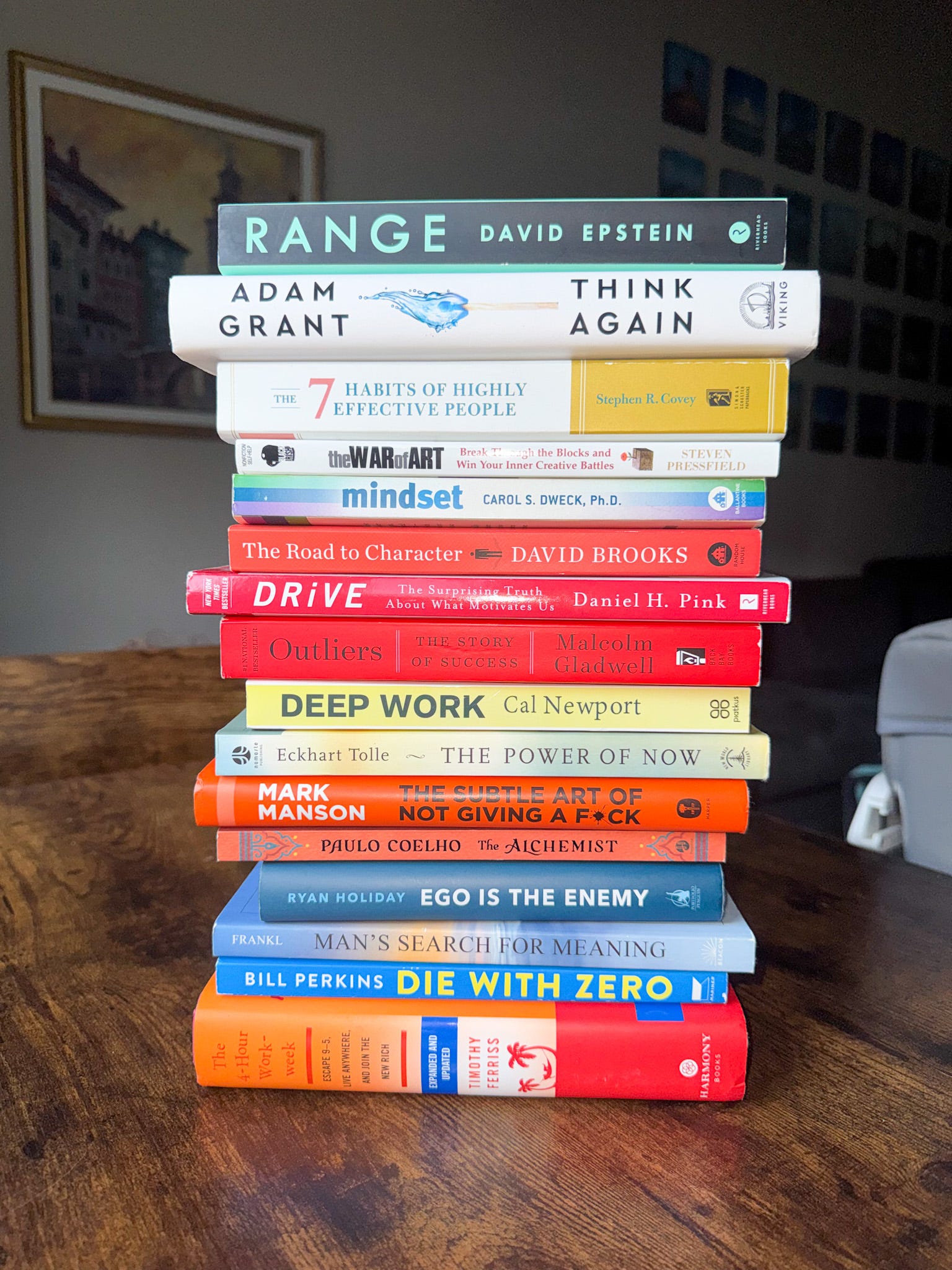
Is the art of reading dying?
When was the last time you read a book cover to cover?
Not your social media feed. Not a newsletter. Not a collection of headlines. An actual book.
If you’re like most people, it’s probably been a while.
And that’s a shame, because reading might be one of the most powerful habits for your growth, your health, and your ability to navigate an increasingly distracted world.
The research is compelling.
Reading has been linked to reduced stress, improved sleep quality, slower cognitive decline, increased empathy, better emotional intelligence, and even greater longevity. Some studies suggest regular readers may live nearly two years longer on average.
But honestly, those benefits aren’t what draw me to reading most.
What I value most is what reading trains us to do.
Slow down. Focus. Reflect. Think.
In a world where our attention is constantly being monetized, manipulated, and fragmented, the ability to sit with a single idea for an extended period of time feels almost revolutionary.
Reading is one of the few activities left that asks us to be fully present. And perhaps that’s why it feels so valuable.
For years, I mostly read books that confirmed what I already believed.
Books the algorithm recommended. Books that felt comfortable. Books that reinforced my existing worldview.
Then I realized something needed to shift. I had to remind myself of something I preach to others, which is that growth rarely happens inside an echo chamber.
Growth happens when we get uncomfortable. When we explore the edges. When we venture into the unknown.
So I started reading differently. I began seeking out ideas that challenged me. Books from different fields. Books written by people I disagreed with. Books that forced me to reconsider assumptions I had never questioned.
The result wasn’t that I changed my mind about everything. The result was that I became a better thinker.
Reading broadly helps us see the world through different lenses. It exposes blind spots. It creates curiosity. It reminds us that there is often more than one way to view a problem.
Some of the books that have had the biggest impact on me weren’t necessarily books I agreed with completely. They were books that stretched me.
Here are a few that changed the way I think and live:
Why We Sleep – Matthew Walker
How Emotions Are Made – Lisa Feldman Barrett
Flow – Mihaly Csikszentmihalyi
Influence – Robert Cialdini
Mindset – Carol Dweck
Breath – James Nestor
Why Zebras Don’t Get Ulcers – Robert Sapolsky
The Comfort Crisis – Michael Easter
Mastery – Robert Greene
Deep Work – Cal Newport
Range – David Epstein
📚 (This list could’ve easily been twice as long… but I’ll stop myself here.)
Each one expanded how I think about health, performance, behavior, work, and life.
Which is the exact beauty of reading.
The problem you’re trying to solve. The idea waiting to be sparked. The perspective you’re missing. The inspiration you’ve been searching for.
There’s a good chance it’s already sitting inside a book. Think about that for a second.
The greatest minds in history have spent decades researching, experimenting, reflecting, and distilling their wisdom into books.
What a privilege it is to access those ideas for the cost of a cup of coffee or a library card.
If you’ve fallen out of the habit, don’t overcomplicate it.
Read what interests you.
Keep a book where your phone usually sits.
Read for five or ten minutes before bed.
Highlight passages that resonate.
Share what you’re learning with others.
Start with one page. That’s literally all it takes.
And one cautionary note (because I’ve been there). The goal isn’t to read more books for the sake of reading more books. The goal is to think better, live better, and become a little wiser along the way.
So let this be your nudge.
Grab a book. A physical one, if possible.
Read something that challenges you. Read something that inspires you. Read something that changes your mind.
Then take what you learn and do something with it.
Because knowledge is valuable. But knowledge applied is where transformation begins.